

The Inflammation I Couldn't Hear - Singing Through Endometriosis
An Essay by Dr. Kimberly Monzón
A Delicate Flower
I’ve often referred to my voice as a delicate flower.
Whenever a performance loomed, I shifted into what I called “training mode” for weeks in advance. Training mode meant the usual singer-athlete regimen: real sleep, steady hydration, consistent practice, and vocal conditioning. These are the basics; what any vocal athlete needs to perform at a high level.
But my preparation always went further.
I had to eliminate caffeine. And alcohol. And sugar. Processed foods. Sometimes gluten. Or dairy. I aimed for an anti‑inflammatory diet. I tried to keep my hormones as balanced as possible. I don’t even drink coffee, yet a single cup of black or green tea could throw me off. One glass of wine? A few days to recover. My “delicate flower” of a voice was forever trying to find a delicate balance of stability.
The irony is that I’ve always considered myself a robust singer. My technique is strong, reliable, and ready on command. I don’t recommend it, but I’ve always been able to sing while sick: sinus infections, upper respiratory infections, even bronchitis. As long as it didn’t turn into laryngitis, I could get through it, and no one would know unless they heard me cough or speak.
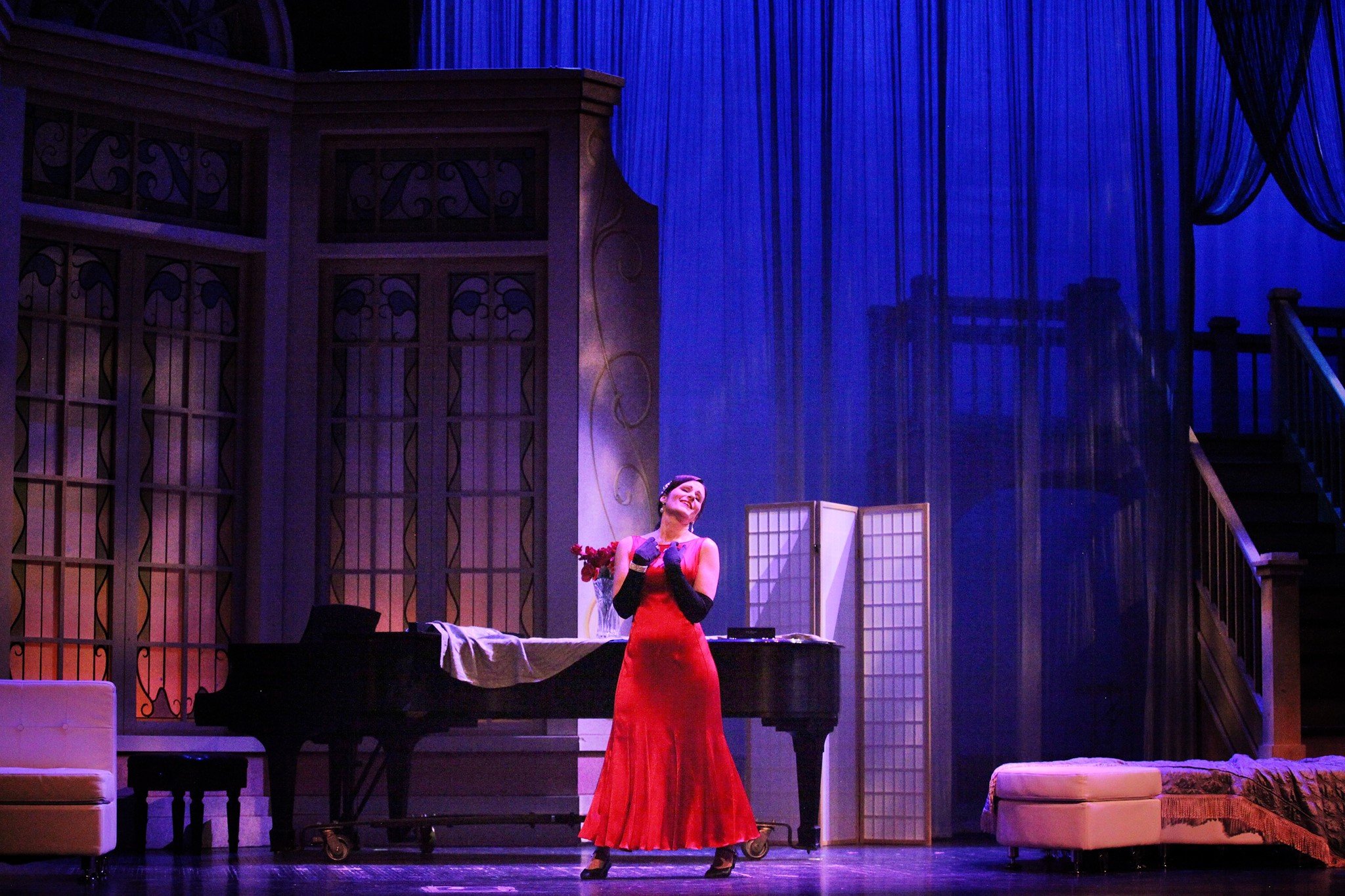
I once performed Susanna in Le nozze di Figaro – the longest role in the operatic repertoire – while battling the worst bronchitis of my life. Immediately afterward, I completed two on‑campus interviews for tenure‑track positions (and was offered one). Acute inflammation? Somehow, I could navigate that vocally.
But the sneaky inflammation, the kind triggered by caffeine, alcohol, or other seemingly small things, was different. That kind caused burning in my throat, bloating, joint pain, pelvic pain, and a variety of symptoms that quietly and persistently interfered with my performance.
---
A Question
I am, by nature, rabidly curious.
I often say, “Singers come by their neuroses naturally.” And it’s true. We must pay attention to everything. Our vocal precision must be nuanced enough to create the expressive colors a composer demands. We monitor hydration, warmth, breath, resonance, and even the subtle premenstrual swelling that can shift the vocal folds.
My curiosity eventually led me into research on how cyclical sex hormones affect vocal performance. I had noticed patterns in my own singing, and I wanted to understand them.
Until 2024, my focus was squarely on the menstrual cycle and its impact on the voice. But over the last five or six years, I began noticing something else: singers in my studio whose vocal struggles around their cycles went far beyond premenstrual swelling. They asked about endometriosis, fibroids, and polycystic ovary syndrome (PCOS). I didn’t have answers.
So I went looking.
I dove into peer‑reviewed research and quickly realized how few answers existed. My research partner and I began a systematic literature review on how these conditions affect the singing voice. The results were so sparse that we shifted to a scoping review instead. Out of eight databases searched, only two articles discuss these conditions and the singing voice in relation to each other. The lack of data was staggering.
The more I read, the more curious – and furious – I became.
One in ten women have endometriosis.
One in ten.
The average time to receive a diagnosis is ten years.
Ten years.
Ten years of pain.
Ten years of misdiagnoses, wrong treatments, gaslighting, and dismissal.
It is inexcusable and unforgivable.
---
An Explanation
Remember what I said about singers and their neuroses? I started noticing changes in my own body – shifts in function, symptoms that didn’t quite add up. After some reading (rabid curiosity strikes again), I wondered whether I was entering perimenopause.
When I asked my primary care physician how I would know, she said, “You’ll start having hot flashes.” That was it. No mention of the wide range of symptoms that can appear long before menopause. No acknowledgment of the ones I was already experiencing.
I immediately sought out a gynecologist who is a member of The Menopause Society.
She listened – I mean, really listened – to my symptoms and to my concerns as a singer. Together, we stepped gently into hormone replacement therapy (HRT), beginning with progesterone. It helped, but some symptoms lingered, so we added a very small dose of topical estrogen.
When I mentioned a single episode of mid‑cycle spotting at my follow‑up, she ordered an ultrasound. She wanted to be sure the estrogen hadn’t triggered a recurrence of the fibroids I’d had before I became a mother fifteen years ago.
I almost canceled the ultrasound. The spotting had happened only once. But I’d been more bloated than usual and had been experiencing some consistent pelvic pain on my left side that my primary care physician dismissed as the normal signs of aging. I’d had chronic pelvic issues for decades. What harm could an ultrasound do?
The results came quickly.
An endometriosis diagnosis.
A 6 cm endometrioma – also called a chocolate cyst – on my left ovary.
Suddenly, so many things made sense. Mysteries that had lingered for years snapped into focus. And, of course, new questions rose to the surface.
---
A New Approach
While I am still trying to make sense of this mysterious illness, I have learned a great deal about endometriosis in the past six months. I have learned I am one of the lucky ones – my pain level and the location and type of my lesion places me in a category often referred to as “silent endometriosis.” I do not experience debilitating pain that prevents me from working and fully enjoying daily life. For others, particularly those with deep infiltrating endometriosis, pain can be severe and relentless, often reaching an eight to ten on the pain scale.
Endometriosis is a chronic inflammatory condition in which endometrial-like tissue grows outside of the uterus. These lesions are mostly found in the pelvic cavity but can be found anywhere in the body. Endo is not simply a localized gynecological disorder. It is systemic, affecting the entire body. Symptoms can include severe pain, excessive or irregular menstrual bleeding, infertility, fatigue, bloating, nausea, and widespread inflammation.
The causes of endometriosis remain unknown.
Invasive, laparoscopic surgery is currently the only definitive means of diagnosis.
There is no known way to prevent endo. There is no cure.
There is good news on the horizon! Government funding for endo has significantly increased since 2020. The bipartisan Endometriosis CARE Act which was reintroduced in 2024 will deliver $50 million each year through the National Institutes of Health to fund research into this condition. This act will also establish a national campaign to promote awareness of endo.
Australian researchers are currently developing a non-invasive and cost-effective blood test to diagnose endometriosis. It is showing strong predictive accuracy and could be extremely impactful in advancing early diagnosis and treatment.
Many folks suffering from endo are finding relief in anti-inflammatory nutrition. I am slowly learning what my triggers are and paying attention to the patterns as they show up in daily life. Learning how to avoid them or plan around them has become part of my routine. It is very much a lifestyle, but one I am settling into with time and patience. In that way it feels deeply familiar, much like the quiet discipline of a singer tending to their voice and paying attention to their body each day.
I am no expert. But I am curious, I listen, and I look for patterns and answers. And I talk to people. I share what I am learning and invite others to do the same. Even the most delicate flowers weather storms, and the female body is incredibly resilient and adaptive. With awareness, attention, and care, we can live in deeper alignment with what our bodies need.
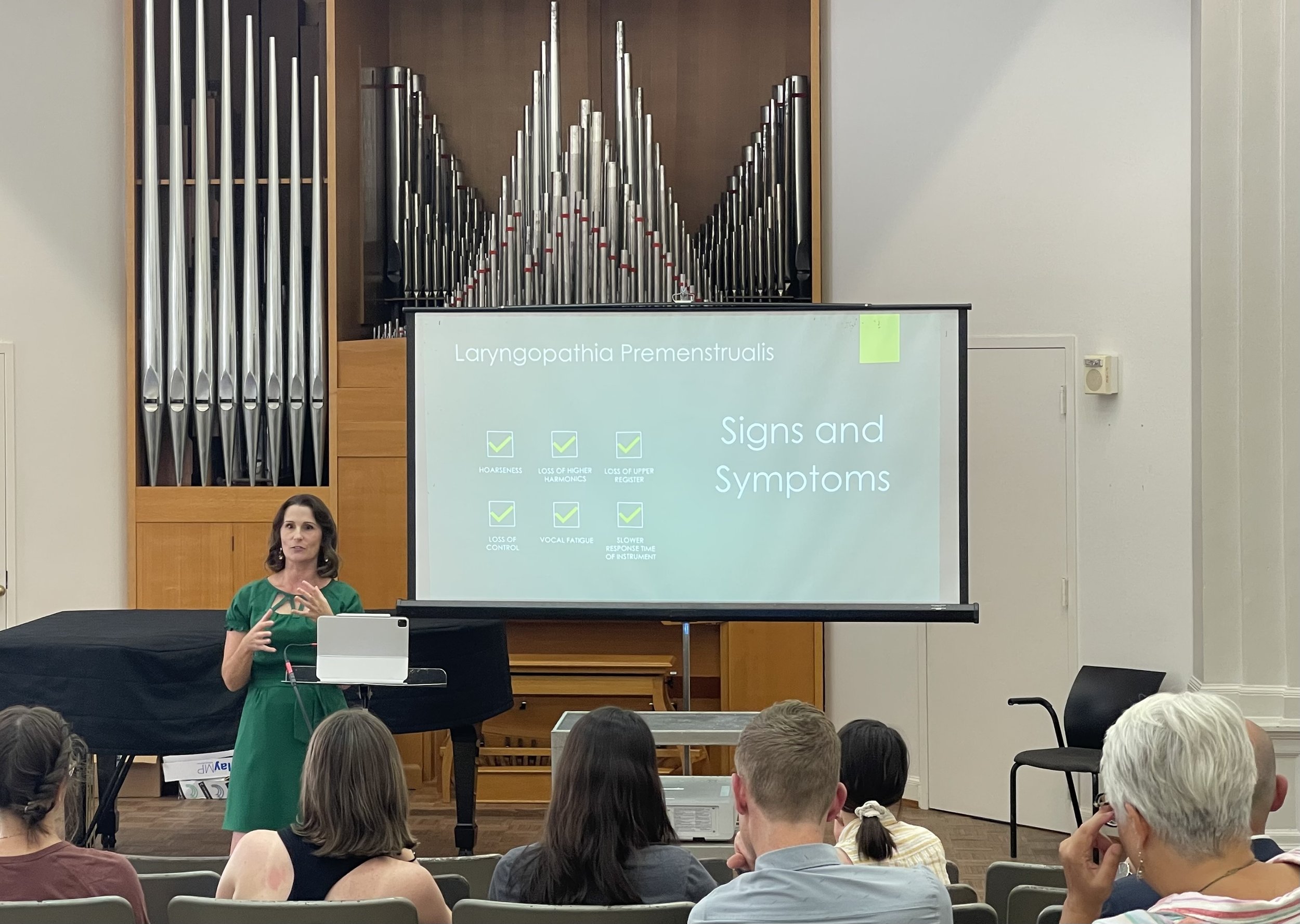
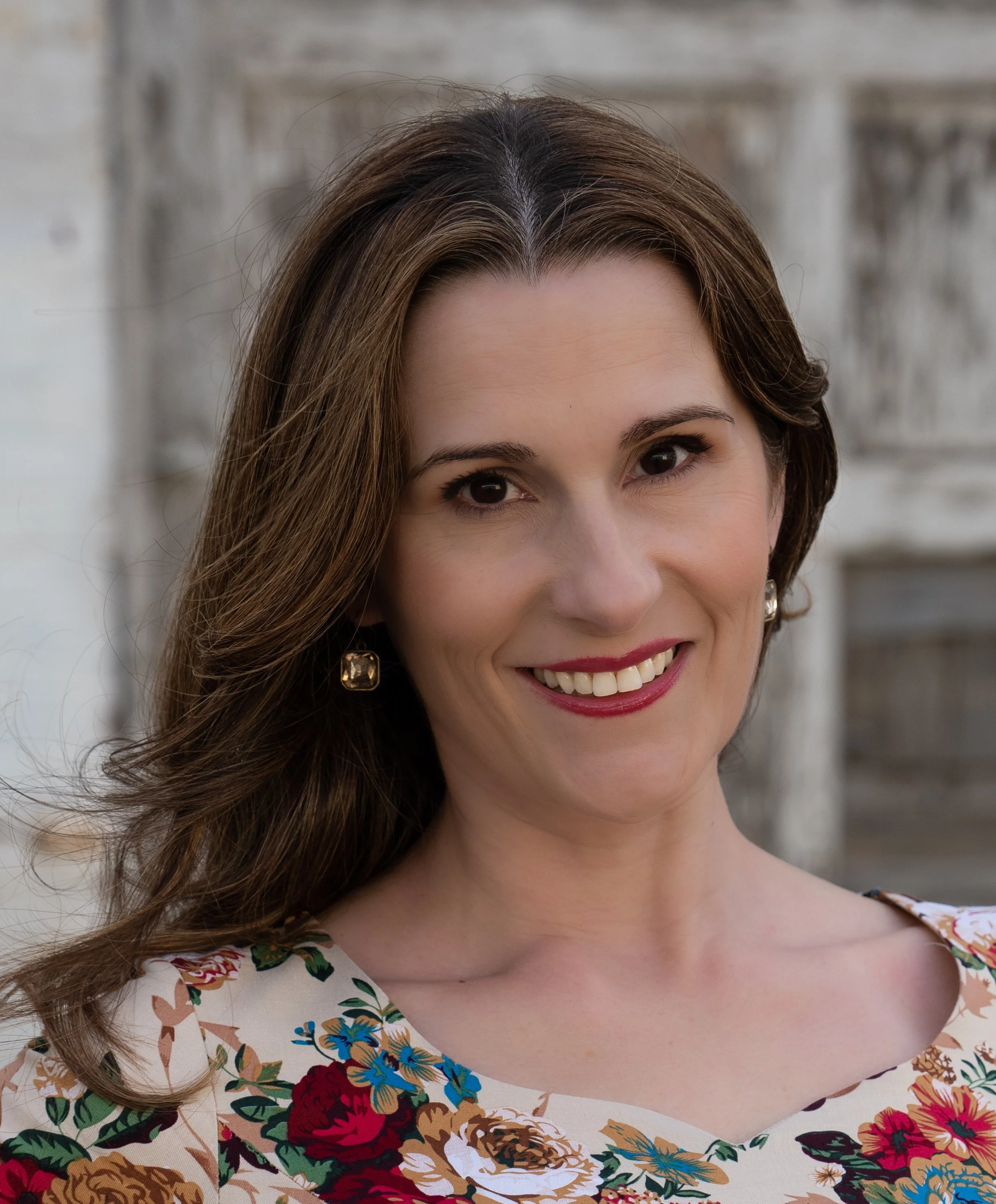
Kimberly Monzón, MM, DMA
Soprano Kimberly Monzón is celebrated for her radiant vocal color and charismatic portrayals of leading operatic heroines. She has performed roles such as Susanna in Le Nozze di Figaro, Magda in La rondine, Tytania in A Midsummer Night’s Dream, Frasquita in Carmen, and Johanna in Sweeney Todd. A dedicated pedagogue, voice researcher, and trained vocologist, Dr. Monzón presents masterclasses nationwide and lectures on health and wellness for vocal athletes. Her work has been featured at the Pan American Vocology Association Symposium, the Voice Foundation, National Opera Association, Opera America, Fall Voice Conference, TMEA, and leading universities including Vanderbilt, UC Boulder, Rice, and The Ohio State University. Her research appears in the Journal of Speech, Language, Hearing and Research; Folia Phoniatrica et Logopaedica; and the Journal of Singing. She holds degrees from Ohio State, the University of Houston, and UMKC and is an active member of PAMA, PAVA, NATS, and TMEA.
